











Why Your Backyard Looks Unfinished and How to Fix It

Most backyards have a problem the owners cannot quite name. The patio is the right size. The furniture is the right shape. The planting is mature, the lighting is layered, the cushions actually match. And yet the whole space reads as almost. Almost finished. Almost a room. Almost worth photographing.
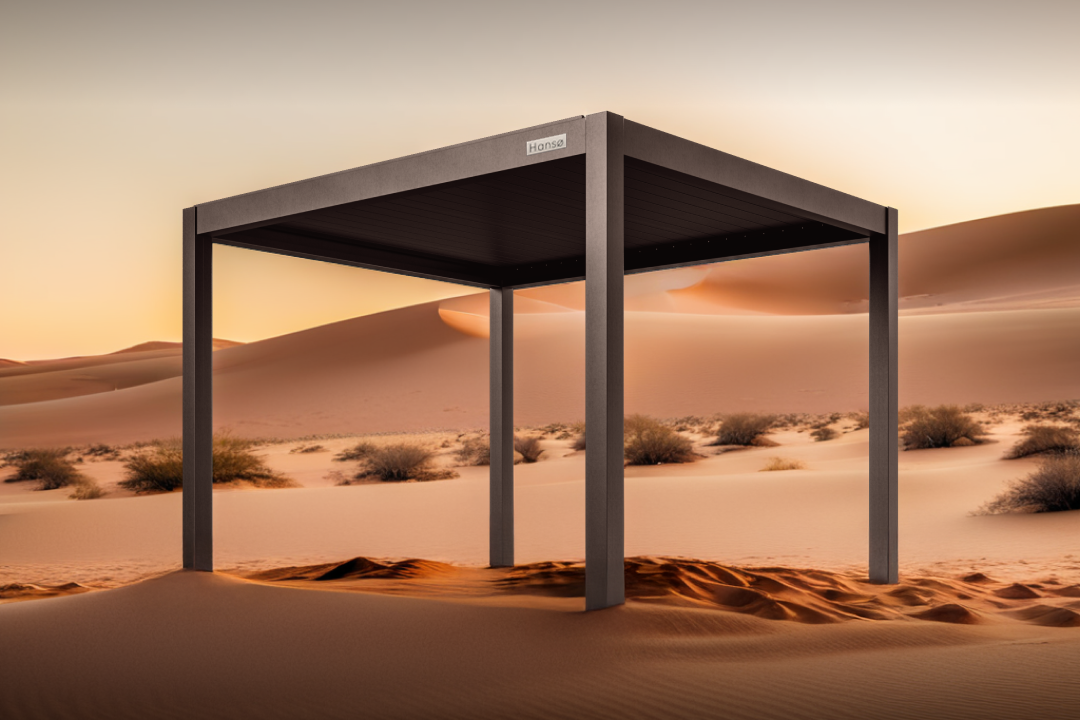
There is a single reason this happens, and once you see it you cannot unsee it. The yard has no ceiling. Every interior room is bounded on six sides. Outdoor rooms are bounded on one (the floor), and the eye has nowhere to land. That one missing plane is doing more visual work than any decorative choice you could make on the ground. It is also the reason a pergola exists in the first place, not as a sun cover, but as the missing fourth wall.
The unfinished feeling, explained in 40 seconds
A backyard looks unfinished when it lacks a vertical anchor, an overhead structure that gives the eye somewhere to land. Furniture, plants, and lighting all work at ground level. Without something pulling the composition upward, the space reads as decorated rather than designed.
That sentence is doing a lot of work, so it is worth slowing down. Interior rooms feel finished because they have walls and a ceiling. Outdoor rooms almost never have either. You can spend a fortune on the right sectional and the right outdoor rug and the result is a parking lot with cushions. The fix is architectural, not decorative.
Landscape architects have written about this for decades. The American Society of Landscape Architects describes the principle as creating "the fourth wall" of an outdoor room. Houzz design guides call it the "ceiling problem." The label matters less than the diagnosis. If there is nothing above your head, the space has no room.
What designers call the Anchor Problem
We call this the Anchor Problem, and it shows up in three predictable ways.
First, the furniture floats. You have placed a beautiful set on a beautiful patio and somehow it still looks like it was dropped there from a catalog page. That happens because there is no overhead boundary telling the eye where the seating area starts and stops.
Second, the yard photographs flatter than it looks in person. Phone cameras compress depth aggressively. Without vertical structure to give the lens a foreground, mid-ground, and background to separate, the entire scene collapses into one plane. This is why your patio looks better in your head than on your camera roll.
Third, you cannot decide where to host. The fire pit, the dining set, and the lounge corner blur into one general "outside." Nothing tells guests where to sit. There is no room to walk into.
Most backyards aren't under-decorated. They're un-roofed.
If any of that sounds familiar, the problem is not the cushions. The problem is upstairs. The broader case for adding a pergola sits on top of this single observation: most outdoor rooms are missing the one element that makes them read as rooms.
Why a pergola, and not a gazebo, awning, or umbrella
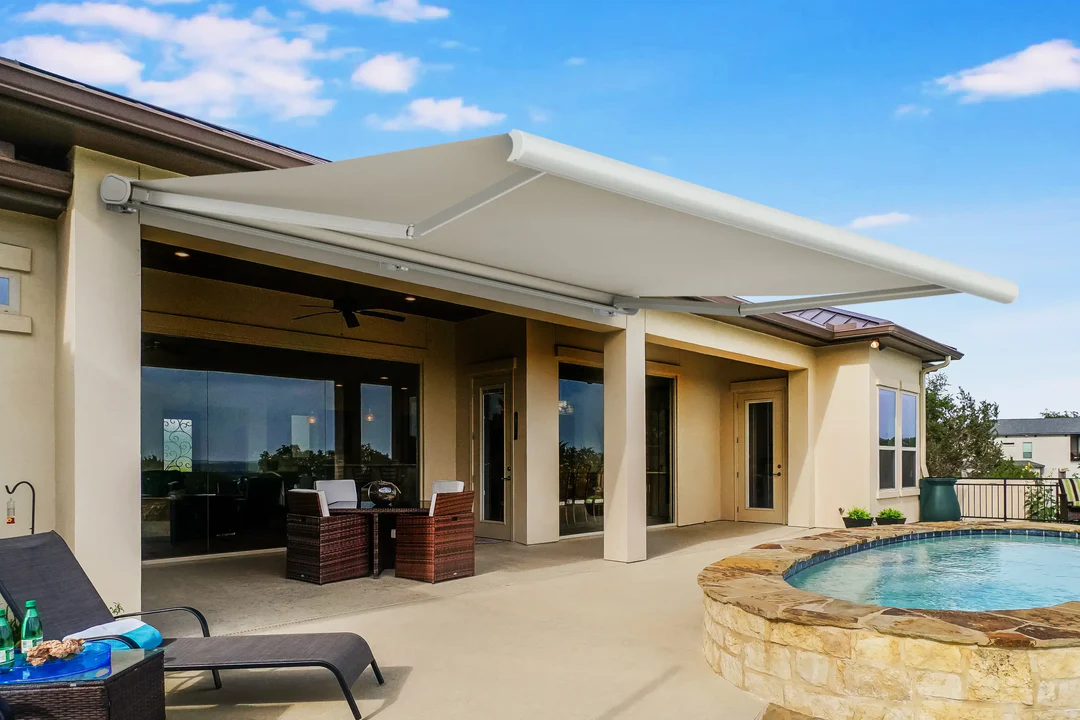
A pergola is the only common outdoor structure that defines a room without enclosing it. Gazebos isolate the space. Awnings shade walls, not seating. Umbrellas hover without grounding. A pergola gives you ceiling, scale, and shadow at the same time.
This is the part that surprises people. Most homeowners assume the question is "what kind of shade do I want." The real question is "what kind of room do I want." A gazebo is a separate building. It chops the yard into compartments and forces a hard edge where you wanted softness. An awning attaches to the house, which means it shades the wall and a few feet of patio, not the seating you actually use. An umbrella does the opposite of anchoring, it casts a small disk of shade that follows the sun, and the eye reads it as temporary. (The longer version of pergola versus gazebo sits in our pillar comparison if you want the deeper read.)
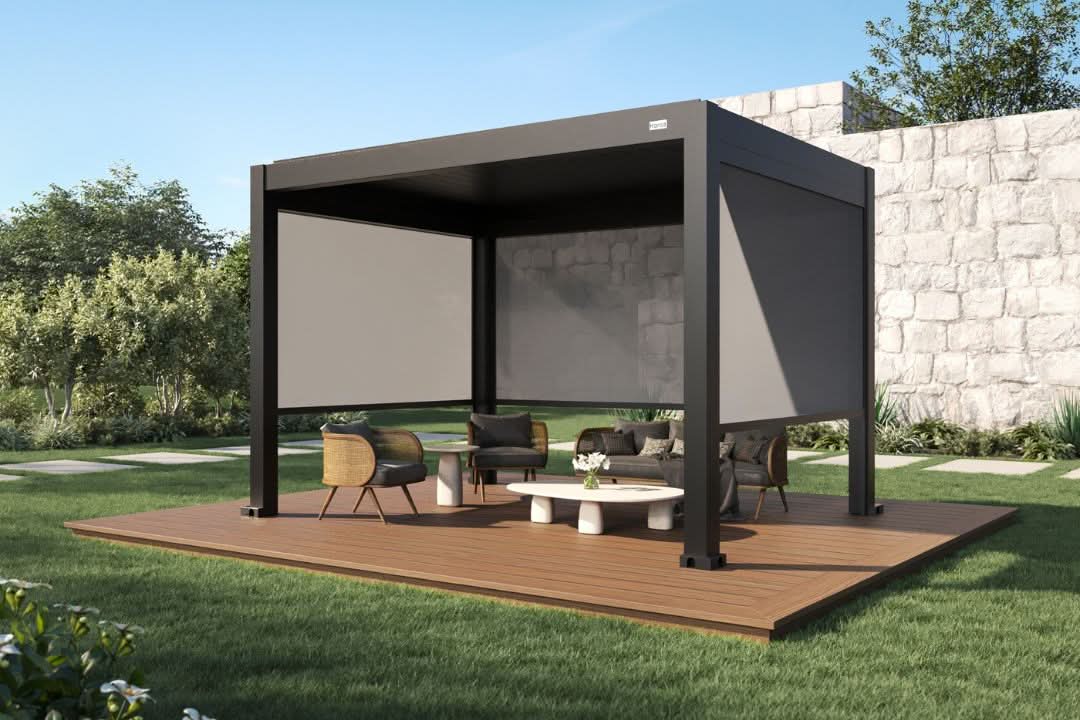
A pergola sits in a different category. It creates an overhead plane without removing the sky. The columns become an implied perimeter. The footprint becomes a defined floor. The louvers become a ceiling you can open or close. The structure reads as permanent because it is permanent, which is exactly what the eye needs.
| Structure | Defines a room | Four-season use | Adds vertical scale | Anchors the composition |
|---|---|---|---|---|
| Umbrella | No | No | Minimal | No |
| Awning | Partial | Partial | Wall-attached only | No |
| Gazebo | Yes, but isolating | Yes | Yes | Over-isolates |
| Sail shade | Partial | No | Minimal | No |
| Pergola (louvered) | Yes, open-air | Yes | Yes | Yes |
The three jobs a pergola has to do, beyond shade
Shade is what most buyers think they are paying for. It is actually the smallest part of the value. A well-specified pergola is doing three things at once, and the shade is a side effect of two of them.
1. Define the room
A pergola creates a ceiling plane and four implied corners. The columns work as the "walls" of an open room, the footprint becomes the "floor," and the louvered roof becomes the ceiling. The proportions matter more than the specs here. A useful rule of thumb: the pergola footprint should cover 60–80% of the usable patio. Smaller than that and it reads as decoration. Larger than that and it eats the surrounding yard. The full pergola size guide walks through the math for the most common patio dimensions.
Sizing tool
What size pergola does your patio actually need?
Enter the usable dimensions of your patio (the part where furniture will sit, not the whole slab). The tool applies the 60–80% rule and surfaces the Hansø size class that fits.
Note: the calculator uses the 60–80% coverage rule. If you plan to host more than four people regularly, lean toward the upper end. If the patio borders a garden bed or path, lean lower so the structure does not crowd the planting.
2. Control the light
A fixed roof gives you one lighting condition all day. An adjustable louvered roof gives you a dial. Open the louvers for dappled light at noon, partial close them for cocktail hour, full close them when the weather turns. The better systems integrate ambient lighting directly into the frame, which means the space stays usable after sunset without floor lamps and string lights doing the work. That single feature roughly doubles the hours per year the space actually gets used. (For the design options at this layer, our roundup of pergola lighting ideas is the cleanest starting point.)

3. Survive the climate
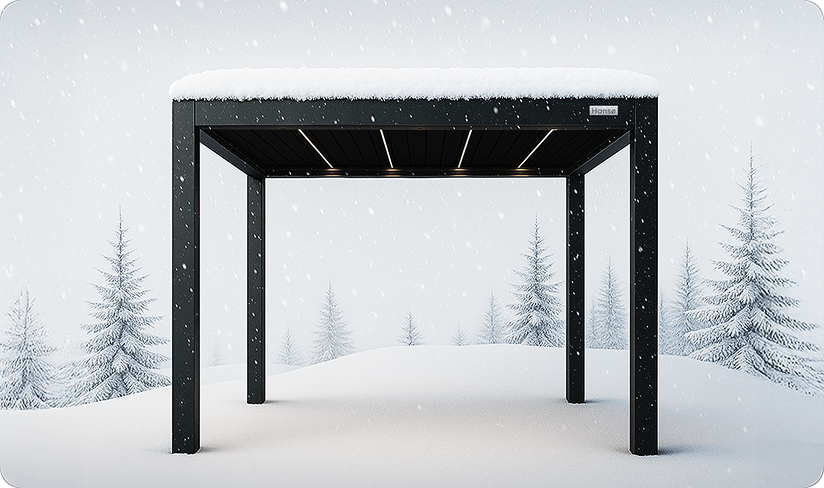
This is where most people underspecify. A pergola that lives outside year-round in the United States needs to be rated for the wind speeds and snow loads of its actual zip code, not a generic "outdoor" label. Top-tier aluminum systems are engineered for 165 mph winds and 60+ PSF snow loads, which covers Category 5 hurricane corridors and serious Northeast winters. Wood pergolas typically rate a fraction of that, which is one of the reasons most premium installations have moved to powder-coated aluminum over the last decade. The math on lifespan tells the same story. A well-built aluminum pergola is engineered for 30 to 40 years of structural life. Cedar and redwood typically deliver 10 to 15 years with annual sealing.

How to match the pergola to the backyard you actually have
Three variables decide which pergola fits which yard: the size of the usable patio, how often the space gets used, and the climate it has to survive. Get those three right and the specs follow naturally.
If the space is compact, design-led, and budget-aware
This is the most common starting point. A patio under 200 square feet, a first pergola, modern aesthetic, manual operation is fine. The right spec sheet at this tier looks like clean lines, single-wall aluminum louvers, freestanding footprints in the 10×10 to 13×19 range, around 120 mph wind rating, and a manual crank with a motor upgrade available later. Hansø's entry-tier Pro+ sits in this category and is a useful reference point if you want to see what that spec sheet looks like in practice.
If the pergola should feel like part of a smart home
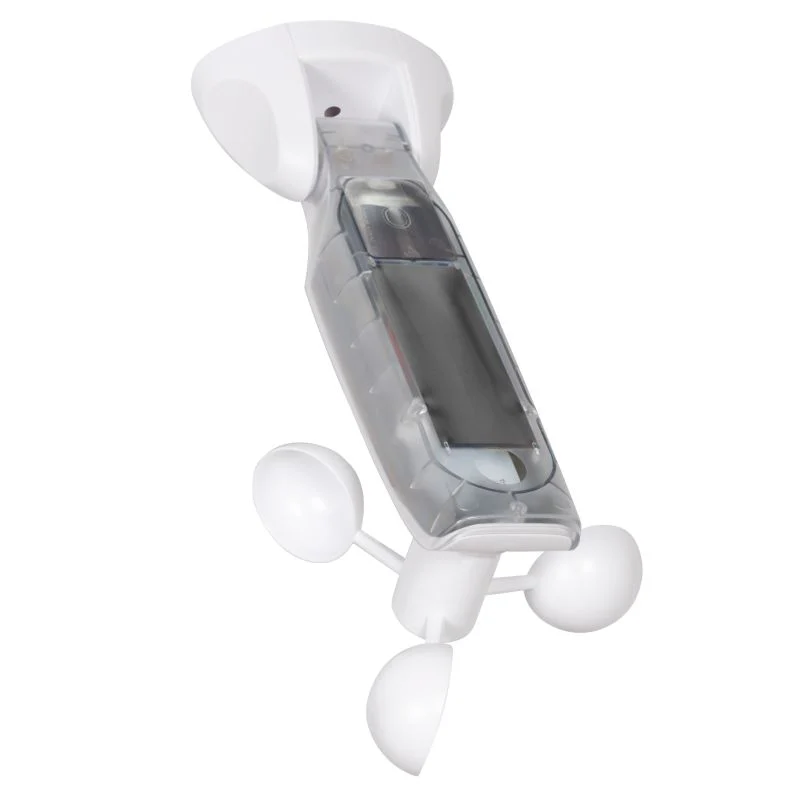
Different profile. Tech-forward homeowner, entertains often, wants the space usable from a phone or voice command without getting off the couch. The spec sheet here looks like Smart Roof Control compatible with Alexa and Google Home, integrated dual-color LED lighting built directly into the frame rather than strung after the fact, and weather sensors that close the louvers when rain starts. Hansø's Horizon line is built this way, which makes it a useful example of what "smart pergola" actually means at the hardware level.
If the weather is the deciding factor
Coastal homeowner, hurricane corridor, snow country, or "this is the forever house." The spec sheet at this tier is unrecognizable from the entry tier. T6 aerospace-grade aluminum, dual-wall louvers, 165 mph wind rating, 60+ PSF snow load, 40-year structural lifespan, Category 5 hurricane certification. Hansø's Master+ is the catalog example here, with louvers roughly 30% stronger than the Pro+ at the same size, which is the difference between a structure that survives a storm and a structure that survives storms repeatedly.

Spec at a glance
Pro+, Horizon, Master+ side by side
Three engineering specs that decide what your pergola can survive.
Wind rating (mph)
Snow load (PSF)
Structural lifespan (years)
Compact & design-led
Pro+
- 120 mph wind, 25 PSF snow
- Single-wall aluminum louvers
- 10×10, 10×13, 13×19 sizes
- Manual crank, motor optional
- 30+ year lifespan
Smart home
Horizon
- 165 mph wind, 60+ PSF snow
- App, Alexa, Google Home control
- Integrated SoftGlow LED frame
- Rain and wind sensors
- 35+ year lifespan
Climate-led
Master+
- 165 mph wind, 62 PSF snow
- T6 aerospace-grade aluminum
- Dual-wall louvers (130% strength)
- Category 5 hurricane rated
- 40+ year lifespan
The mistakes that keep a backyard unfinished, even after the pergola arrives
Six common ones, in rough order of frequency.
- Buying too small for the patio. The pergola needs to cover 60–80% of the usable patio to read as a room. Anything below 60% becomes lawn furniture with ambition. Measure the seating zone, not the slab.
- Centering on the house instead of on the seating. The pergola anchors the seating area, not the back door. The back door is a vertex, not a center point. Align the columns to the conversation pit, the dining table, or wherever people actually sit.
- Choosing a fixed-roof when the use case is four-season. If the louvers cannot close, the space is unusable in rain. That eliminates roughly half the calendar in most of the country. Adjustable louvers are the difference between a sunny-day amenity and a year-round room.
- Skipping the lighting layer. A pergola without integrated lighting is a daytime amenity. Integrated LEDs convert it to an evening room, which roughly doubles the hours per year the space gets used. String lights are a stopgap, not a finish.
- Ignoring wind and snow ratings for the zip code. A 25 PSF louver in Vermont is a liability. A 165 mph louver in Phoenix is overspecified. Match the rating to the local building code wind speed and the historical snow load.
- Pairing premium hardscape with a vinyl pergola. Travertine and vinyl will fight each other forever. The structure has to belong to the same material conversation as the floor below it. Powder-coated aluminum reads as architecture. Vinyl reads as patio set.
People also ask
Does a pergola really make a backyard look more finished?
Yes, because the unfinished feeling is almost always architectural, not decorative. Adding a defined overhead structure gives the eye a vertical anchor and tells the rest of the composition where to land. Furniture, planting, and lighting all start to read differently once the ceiling plane exists.
What size pergola do I need for my patio?
The pergola should cover roughly 60–80% of the usable patio. For a 12×16 patio, that means a footprint between 10×12 and 11×14, which the 10×13 Pro+ covers cleanly at 68%. Smaller than 60% reads as decoration. Larger than 80% eats the surrounding yard. Measure the seating zone, not the slab.
Aluminum or wood, which lasts longer?
Powder-coated aluminum lasts roughly three times longer than wood with a fraction of the maintenance. Premium aluminum pergolas are rated for 30 to 40 years of structural life. Cedar and redwood typically deliver 10 to 15 years with annual sealing. The cost-per-year math favors aluminum for any installation meant to last.
Is a louvered pergola worth the cost over a fixed roof?
For most homeowners, yes. Louvers convert the structure from a daytime shade amenity into a four-season room. The break-even point sits around 40–50 use-days per year. Below that, fixed-roof works. Above it, the louvers pay for themselves through the additional hours the space actually gets used.
Can I install a pergola myself?
Most kit-style pergolas can be installed by two people in two to four hours once the surface is prepped. The hard part is not the assembly, it is the slab, the leveling, and the anchoring. If the patio is already in place and level, DIY is realistic. If not, hire the pad out and install the frame yourself.
What wind speed should my pergola be rated for?
Match the rating to the local building code wind speed for your zip code. Coastal Florida and the Gulf need 165 mph rated systems. Most of the interior US works with 120 mph. The mistake is buying a 90 mph residential canopy and assuming "outdoor rated" means "storm rated." It does not.
Do pergolas add resale value to a home?
Yes, when they are permanent installations matched to the architecture. Real estate appraisers typically credit permanent aluminum pergolas as a structural improvement rather than landscaping. Vinyl and basic wood structures are usually classed as soft landscaping and credited at a lower rate.

The quiet test
Here is the one-question version of everything above. Stand on the patio. Look up. If nothing is there, that is what is missing.
The unfinished feeling is not about your taste, your furniture, or your planting. It is about a missing ceiling. The pergola is the architecture that lets the decoration finally do its job, and the right pergola is the one whose spec sheet matches the yard you actually have.
Not sure which pergola fits your yard?
Compare the three Hansø ranges side by side, or talk to a pergola expert and get a fit recommendation in about ten minutes.


